The Unexpected $15 Billion Hobby
In 1909, a tobacco company accidentally invented a $15 billion hobby.
Nobody was trying to flip an Honus Wagner.
Your grandfather didn’t slide a Mickey Mantle into his bicycle spokes because he was thinking about ROI. He did it because it sounded cool and made riding home better. The sports card hobby has already survived two major crashes—both caused by the same mistake:
People forgot it was a hobby.
At Cardboard Kings, we believe education and passion are the only things that keep this space healthy. So let’s talk honestly about what happened, why it matters, and how collectors can navigate today’s market without losing sight of what makes this worth doing in the first place.
Why This Topic Matters in the Hobby
The sports card market is at a crossroads. The industry hit $14.9 billion in 2024 and is projected to reach $52.1 billion within the next decade. In December 2025 alone, collectors spent $381 million online across nearly six million transactions.
That sounds like success.
It isn’t automatically health.
In 2020, sports card sales exploded by 142%. eBay sold roughly 4 million cards in 2019. By 2021, a card was selling every two seconds on their platform. Stuck-at-home Americans rediscovered old collections, stimulus money flooded the system, and social media created instant hype cycles with no brakes.
Then in May 2021, Target temporarily stopped selling all trading cards after a group of adults assaulted another man in a parking lot.
Over cards.
That’s not a hobby. That’s a warning sign. The shift happened fast:
Cards went from binder pieces to portfolio assets- Graded cards became “stocks,” tracked with indices and population reports- Breaking culture replaced traditional buying- Set building quietly disappeared from the mainstream
One shop owner told ESPN that 90–95% of his revenue now comes from breaks—describing his store as closer to a digital art gallery than a card shop. Nobody wants base cards. Nobody builds sets. It’s chase cards, hits, and gambling.
If this sounds familiar, it should.
The parallels to the Junk Wax Era are unmistakable. Same greed. Same oversupply. Same speculation. Same disregard for actual collectors. Just swap “dealers” for “breakers” and the script is identical.
What Collectors Need to Know
The Origin Story Nobody Asked For
Sports cards weren’t invented for collectors.
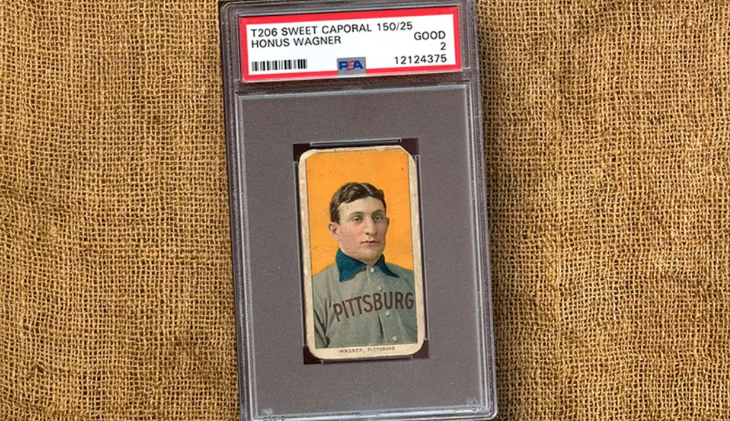
They were cigarette pack stiffeners marketing inserts used by American Tobacco in the late 1800s to increase brand loyalty. The legendary T206 set (1909–1911) gave us the Honus Wagner, now the hobby’s holy grail, with fewer than 60 known copies. Wagner allegedly objected to his image being used to sell cigarettes.
The hobby was born by accident.
A marketing gimmick became a multi-generational passion.
Nobody was investing. Kids traded cards. Put them in spokes. Tossed them in shoeboxes. That’s the DNA of collecting.
Five Eras That Shaped the Hobby
- Pre-WWII Vintage (Before 1941): Tobacco cards, natural scarcity
- Post-WWII Vintage (1945–1979): Topps dominance, collecting as childhood ritual
- Junk Wax Era (1980–1996): Overproduction, speculation, collapse
- Modern Era (1997–2012): Insert cards, artificial scarcity, hobby winter
- Parallels Era (2013–Present): Serial numbers everywhere, $5,000 boxes, ultra-premium focus
After WWII, Topps turned cards into a shared childhood experience. The 1950s weren’t valuable because of intention they became valuable because nobody was thinking about value at all. The first card show didn’t happen until 1970. The National debuted in 1980, born from local collector clubs in cities like Boston, Detroit, and Los Angeles.
The community built the hobby. Greed nearly killed it twice.
The Junk Wax Cautionary Tale: The Junk Wax Era wasn’t an accident.
At its peak, manufacturers produced an estimated 81 billion baseball cards per year. Adults started treating cards as investments. Companies responded by flooding the market.
The result?
A near-total collapse in value, bankrupt manufacturers, and an entire generation walking away. Different packaging. Same math.
Today, breakers price team slots to guarantee profit. A $1,000 box becomes $1,500 in slot revenue. Traditional collectors get priced out. Box prices disconnect from the actual card value. Platforms like Whatnot valued at $3.7 billion—are built around behavioral psychology designed to maximize impulse spending.
What’s healthy:
- Passion-driven collecting across sports and TCGs- Education helping collectors make informed decisions- Card shows booming, with 25% of National attendees under 18- Real community engagement
What’s risky: - Speculation-first mentality- Manufactured scarcity across endless parallels- Breaking culture replacing ownership- Flipping replacing collecting
Collecting the Right Way
Why Education and Passion Still Work**The market is growing—and when driven by collectors, that growth is sustainable.Card Ladder indices show Pokémon up 116% year-over-year. Soccer up 91%. PSA reports an influx of collectors across age groups, with kids attending shows alongside their parents.Non-sports categories tell an even clearer story.
One dealer described Marvel and Pokémon cards as having better “equilibrium”a healthier balance between supply and demand because people collect them for love of the IP, not to speculate. That’s the lesson: Passion-driven demand lasts longer than hype-driven demand .The strongest collectors today understand grading, populations, and cycles—but they buy what they love. They’re smart about value without letting dollar signs dictate joy.
The Coexistence Thesis: This doesn’t have to be either/or. You can love cards and understand value. You can be financially aware without turning your collection into a spreadsheet. The ultra-high-end market proves it. Jordan–Kobe Logomans are selling for eight figures. Ruth cardsare clearing $4 million. Legends in truly scarce sets endure. Rookie hype doesn’t.But value isn’t limited to auction headlines. The cards that matter most are the ones tied to moments, players, and memories that mean something to you.
How to Apply This as a Collector
1. Collect your PC first. Invest second. If values rise, great. If not, you still love what you own.
2. Blue chips over hype. Legends endure. Trends don’t.
3. Apply the Junk Wax lesson today. Forty “rare” parallels don’t create scarcity. They dilute it.
4. Use flipping as a tool, not an identity. Sell doubles. Fund passion. Don’t lose the plot.
5. Choose community over convenience. Shows, trades, conversations—this is where the hobby stays human.
6. Learn before you buy. Education is the edge. Always has been.